


Cart
0
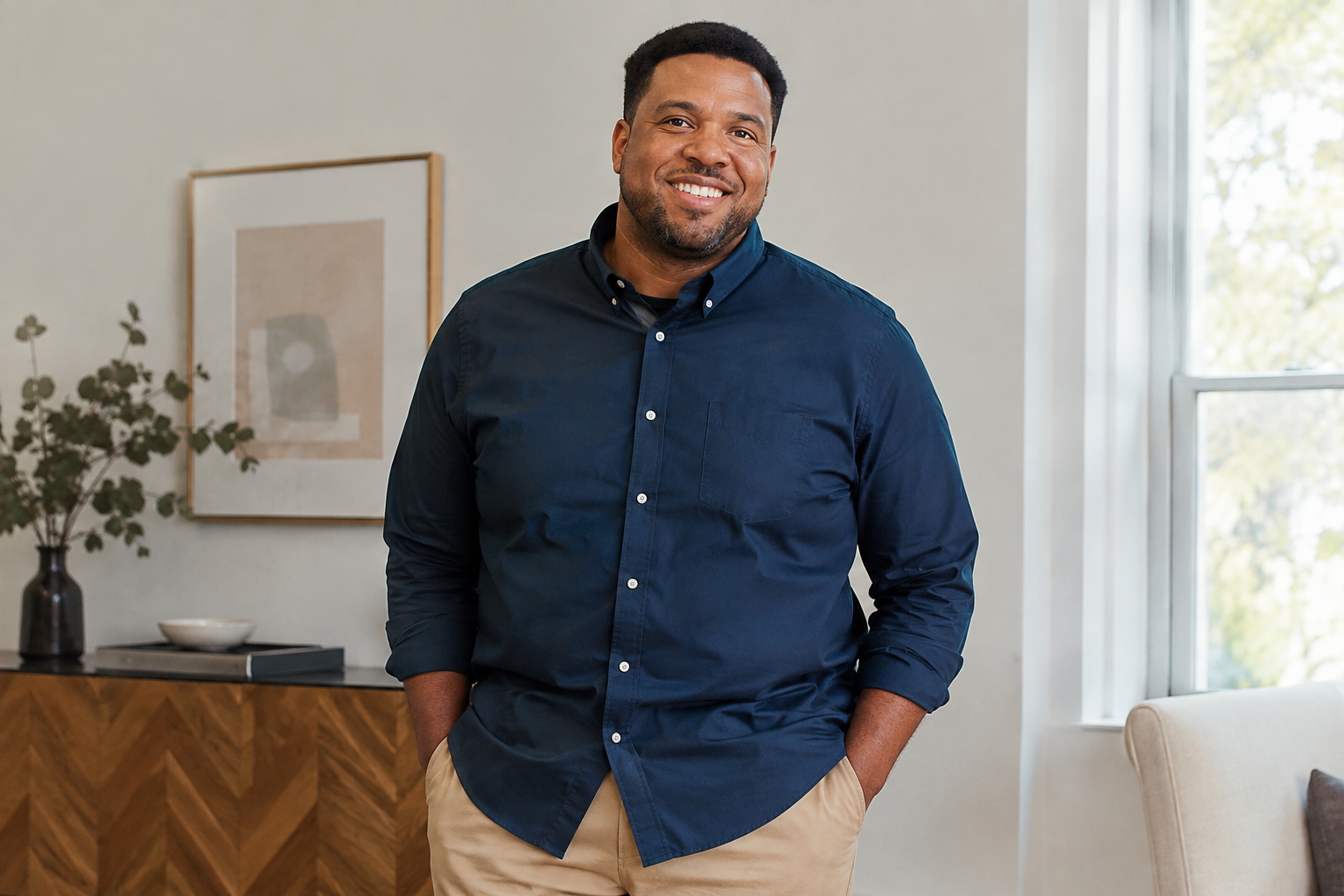
How to Find Men’s Plus Size Clothing That Fits Your Shape
The most reliable way to find men's plus size clothing that fits is to start with your own measurements, then compare them against each brand's size chart. A label like 2XL or 3XL is only a rough guide, because cuts, fabrics, and proportions vary widely from one brand to the next.
Measure chest, waist, hips, inseam, and rise before choosing a size
Take five core measurements with a soft tape measure, wearing light clothing and keeping the tape snug but not tight. Stand relaxed and breathe normally, and ask someone to help if you can, since measuring alone often leads to errors.
- Chest: wrap the tape around the fullest part, under the armpits and across the shoulder blades.
- Waist: measure at your natural waistline, or where your pants actually sit, which may be lower than your navel.
- Hips: measure around the widest point of your hips and seat.
- Inseam: measure from the crotch seam down to where you want the hem to fall.
- Rise: measure from the crotch seam up to the top of the waistband, or sit and measure from the chair to your waist.
Rise matters more than many shoppers expect. A rise that is too short digs in when you sit, while one that is too long bunches at the stomach. Write your numbers down and keep them in your phone so you can check them quickly while shopping.
Use brand-specific size charts instead of assuming sizes match across labels
Always check the size chart on the exact product page, because a 3XL in one brand can measure several inches different from a 3XL in another. Compare your chest, waist, and inseam to the chart's garment or body measurements, and note which type the brand lists.
| Measurement | Your number | What to check |
|---|---|---|
| Chest | Record it | Chart range for tops |
| Waist | Record it | Chart range for bottoms |
| Inseam | Record it | Available lengths |
If a chart lists body measurements, choose the size that matches yours. If it lists garment measurements, allow a few extra inches of ease for comfort, especially in structured pieces like jackets and jeans. Fabric content also matters, since stretch fabrics forgive small differences while rigid denim and woven shirts do not.
What Makes Men’s Plus Size Clothing Fit Better?
Men's plus size clothing fits better when the cut matches your proportions and the garment sits correctly at the shoulders, torso, and rise. Once you have your measurements, these two factors decide whether a piece looks tailored or simply large.
Compare relaxed, regular, and athletic cuts for comfort and proportion
Cut describes how a garment is shaped around the body, and it matters as much as the size on the label. The right cut keeps fabric from pulling across the stomach or bunching around the arms.
- Relaxed fit: extra room through the chest, waist, and thigh. It suits men who want maximum comfort and works well for hoodies, joggers, and casual shirts.
- Regular fit: moderate room with a straighter line from chest to hem. It is the most versatile option for button-ups, tees, and everyday jeans.
- Athletic fit: more room in the chest, shoulders, and thighs with a tapered waist. It suits broad, muscular builds, though it can feel tight across a fuller midsection.
If you carry weight mostly in the stomach, a regular or relaxed cut usually drapes more cleanly than an athletic one. If your chest and shoulders are broad with a smaller waist, athletic cuts prevent the extra fabric that makes a shirt look boxy.
Check shoulder seams, sleeve length, torso room, and rise for signs of a good fit
A good fit shows in four places, and you can check each one in a few seconds in front of a mirror.
- Shoulder seams: they should land at the edge of your shoulder bone. Seams that slip down the arm mean the size is too big, while seams that dig inward mean it is too small.
- Sleeve length: the cuff should end at the wrist bone on a shirt and cover the wrist slightly on a jacket or hoodie.
- Torso room: you should be able to raise your arms and sit down without the hem riding up or buttons straining. Aim for a hand's width of ease at the chest and waist.
- Rise: the distance from crotch to waistband. A mid or high rise sits above the stomach and stays put, while a low rise tends to slide down and dig in when you sit.
If a garment passes the shoulder and rise checks, most other fit issues can be fixed with a simple hem or sleeve adjustment.
Which Fabrics and Details Improve Comfort and Appearance?
The best fabrics for men's plus size clothing are breathable blends with moderate stretch, and the best details are reinforced seams and adjustable waistbands. Once the cut is right, these choices decide whether a garment stays comfortable and keeps its shape after months of wear.
Choose breathable stretch fabrics that move without clinging or losing shape
Look for fabrics that stretch and recover. A blend of cotton with 3–5% elastane or spandex moves with your body, then returns to its original shape instead of bagging at the knees or elbows. Cotton-poly blends, French terry, and mid-weight jersey are reliable choices for everyday pieces because they let air circulate without feeling thin.
Weight and weave matter as much as fiber content. Fabric that is too light can cling around the midsection and show every seam, while heavy fabric traps heat. Aim for a medium weight with a bit of structure, which skims the body instead of hugging it.
- Hoodies and joggers: brushed French terry or fleece with a stretch-rib cuff.
- Tees and polos: combed cotton or cotton-modal blends that resist curling at the hem.
- Jeans and trousers: stretch denim or twill with about 2% elastane for seat and thigh comfort.
- Warm-weather wear: linen blends or moisture-wicking knits.
Do a quick stretch test in the store or at home: gently pull the fabric and see whether it snaps back. If it stays distorted, it will likely sag after a few washes.
Look for reinforced seams, adjustable waistbands, and practical construction
Construction shows up where clothes take the most strain. Check for double-stitched or flat-felled seams at the crotch, inseam, and armholes, since these areas stretch and rub the most. Bar-tacking at pocket corners and belt loops, plus a gusset in the crotch, helps prevent early tearing.
Waistbands deserve extra attention. Elastic waistbands with an internal drawcord, or button-tab adjusters inside the waist, let you fine-tune the fit as your body changes through the day. Look for a contoured or slightly higher back rise so the waistband stays put when you sit.
- Pockets lined with sturdy fabric that doesn't stretch out or poke through.
- Longer shirt tails that stay tucked or sit cleanly when untucked.
- Gusseted underarms for easier arm movement.
- Sturdy zippers and well-anchored buttons or snaps.
Quality is easy to spot: even stitching, no loose threads, and seams that lie flat when you pull the fabric gently.
How to Build a Versatile Men’s Plus Size Wardrobe
A versatile wardrobe starts with a small set of well-fitting pieces that mix and match across every setting. Once you know which fabrics and construction details hold up, you can spend your budget on items you will actually wear on repeat.
Choose well-fitting essentials for work, casual wear, and special occasions
The most useful approach is to buy for the three situations you dress for most often, then choose pieces that overlap between them. Aim for fewer items with a reliable fit rather than a closet full of "almost right" clothes.
- Work: two or three button-up shirts in white, light blue, and a subtle pattern, plus dark chinos or tailored trousers with a comfortable rise.
- Casual: well-cut jeans in a dark wash, a few heavyweight tees, a quarter-zip or hoodie, and joggers with a tapered leg that skim rather than cling.
- Special occasions: one unstructured blazer or jacket in navy or charcoal, paired with a crisp shirt and dark trousers that can be tailored if needed.
Shoes and a belt in a matching tone tie these categories together. A dark sneaker works with jeans and joggers, while a leather boot or loafer covers the dressier end. If one piece, like a jacket, needs alterations, treat that as part of the purchase price.
Use layering, color, and proportion to create outfits that feel balanced
Balanced outfits come from keeping your top and bottom visually proportional and using layers to add structure. A shirt that ends around mid-zipper, worn open over a fitted tee, creates a clean vertical line that elongates the torso.
- Layer with purpose: a lightweight overshirt, bomber, or denim jacket adds shape without bulk. Avoid thick, stiff layers across the midsection.
- Use tonal dressing: wearing shades from the same color family, such as navy, charcoal, and black, creates a streamlined look.
- Place contrast carefully: a lighter shirt under a darker jacket draws attention upward, while bold prints work best on pieces you want to feature.
- Match volume: pair a relaxed top with a straight or slightly tapered leg so neither half overwhelms the other.
Build outfits around three neutral base colors and add one accent. This makes every piece easy to combine.
With a core palette and consistent fit, getting dressed becomes quicker, and each outfit looks deliberate rather than improvised.
Men’s Plus Size Clothing: Fit and Shopping FAQs
How should men’s plus size clothing fit around the stomach and shoulders?
Men's plus size clothing should skim the stomach without pulling, and the shoulder seams should sit exactly at the edge of your shoulder bone. Around the midsection, the fabric should hang straight down or drape gently. Buttons should not gape, and horizontal pull lines across the belly mean the garment is too small. Shirts and jackets should also not bunch up in a way that adds visual bulk.
At the shoulders, a seam that droops onto the upper arm means the size is too large, while a seam that digs inward restricts movement. A quick test is to raise your arms to chest height. If the hem lifts above your belt line or the sleeves feel tight, try a longer cut or more room in the torso.
Should I size up if I am between sizes?
Size up when the garment is fitted or made of non-stretch fabric, and size down when it is relaxed, oversized, or stretchy. Extra room can be tailored out, but a garment that is too tight cannot be let out much.
- Choose the larger size for woven shirts, blazers, and structured jackets.
- Choose the smaller size for hoodies, joggers, and knit tees with a relaxed cut.
- Prioritize the area that is hardest to alter, usually the shoulders and chest.
How can I tell whether an online size chart is accurate for me?
Compare your own measurements with the chart, then confirm them against the garment’s listed dimensions and customer reviews. A size chart may show body measurements, while product details may list actual garment measurements, and the difference tells you how much ease to expect.
- Measure a similar item you already own and compare it with the listed garment measurements.
- Read reviews from buyers who mention a similar height and weight.
- Check the return policy before ordering, especially for a new brand.
- Look for notes such as “runs small” or “true to size” repeated across several reviews.
Which alterations are most useful for plus size men’s clothing?
The most useful alterations are hemming pants, shortening sleeves, and taking in the sides of shirts, since these fix common proportion issues at a modest cost. A tailor can also taper trouser legs for a cleaner line, adjust the waistband, or shorten a jacket hem.
Avoid altering the shoulders or the chest on structured jackets, as these changes are complex and costly. It is usually better to buy the right shoulder fit and adjust everything else around it.

