


Chariot
0
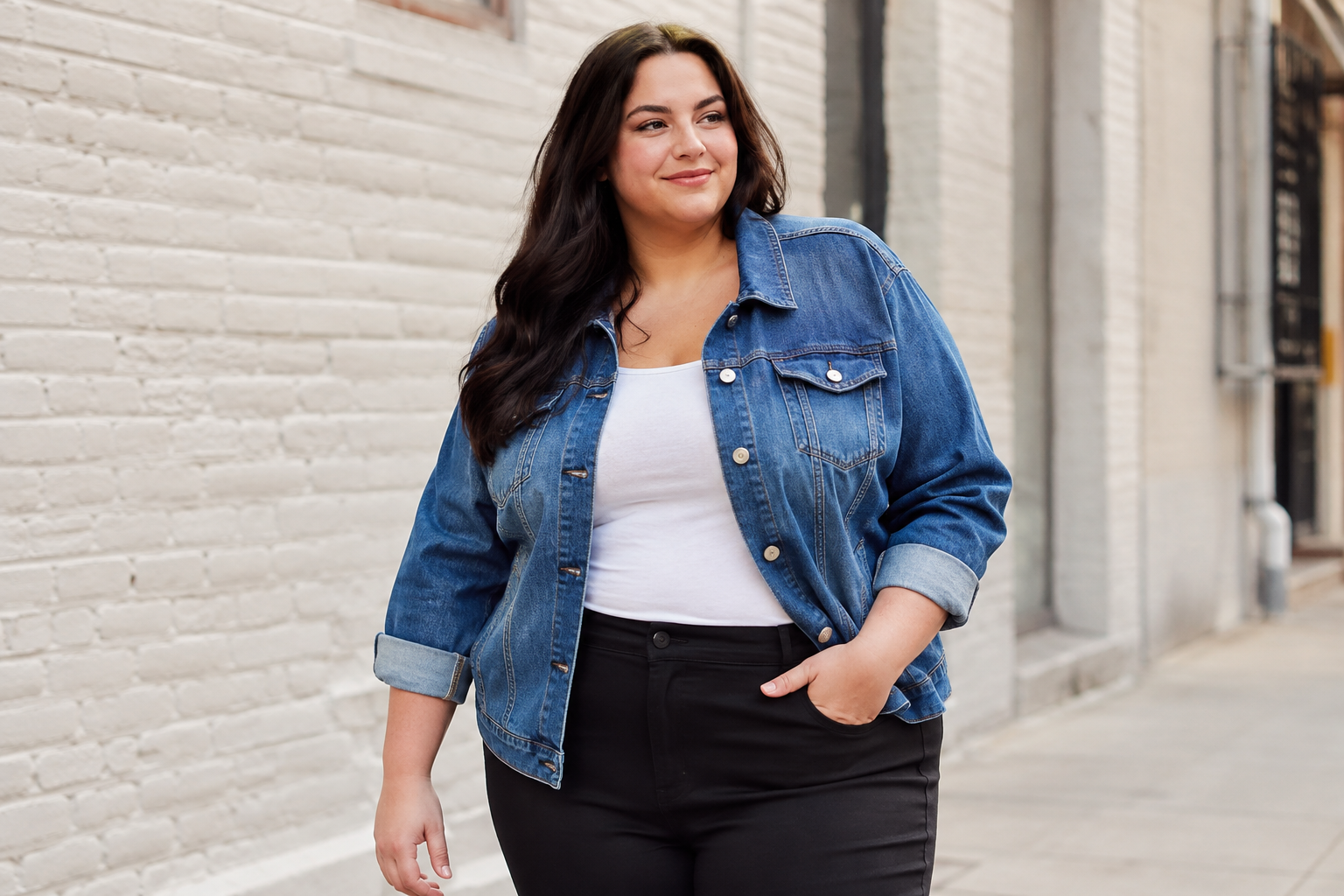
How to Choose Denim Jackets for Big Sizes That Fit and Flatter
The best denim jackets for big sizes fit smoothly across the shoulders first, then leave enough room in the bust, upper arms, and midsection to move without pulling. If the shoulders and bust fit well, the rest of the jacket usually follows.
What makes a plus-size denim jacket comfortable through the shoulders, bust, and arms?
Comfort comes from room in three areas: shoulder width, bust and upper-body ease, and sleeve capacity. Denim has little give, so a jacket that is even slightly tight in one of these zones will feel restrictive within minutes.
- Shoulders: The jacket should sit flat across your upper back with no pulling or rippling between the shoulder blades.
- Bust: You should be able to move your arms forward, as if hugging someone, without the front panels gaping or straining.
- Arms: Look for a roomy bicep and elbow, plus a cuff that slides over your wrist without squeezing.
Try this test in the fitting room or at home: cross your arms in front of you and reach forward as if driving. If the back seam tightens sharply or the sleeves ride up past your wrists, size up or choose a style with a stretch blend or an articulated sleeve.
How to use shoulder seams, button closure, and hem placement to assess fit
Three visual checkpoints tell you quickly whether a jacket works for your body: where the seams land, how the buttons behave, and where the hem ends.
- Shoulder seams: They should sit at the edge of your shoulder bone. Seams that creep toward your neck mean the jacket is too small, while seams hanging down your upper arm create a deliberate oversized look and a less structured one.
- Button closure: The jacket should button without fan-shaped wrinkles pulling around the bust or stomach. Smooth, relaxed buttoning suggests a good fit, though many people prefer to wear denim jackets open.
- Hem placement: A hem landing at the natural waist or just over the hip bone usually looks balanced. A hem that stops at the widest part of your hips can visually emphasize that area, so adjust the length to suit your outfit goal.
If a jacket fits through the shoulders and bust but feels slightly loose at the waist, it is usually the right size. Tailoring a waist is easier than fixing tight shoulders.
Which Denim Jacket Cuts Flatter Different Curves?
No single cut flatters every body, but each one solves a different proportion goal. Once the shoulders, bust, and arms fit, the silhouette decides where the eye lands and how easily the jacket works with the rest of your wardrobe.
Compare classic, cropped, longline, and oversized fits by shape and outfit goal
Classic jackets, cropped jackets, longline jackets, and oversized jackets each suit different shapes and outfit goals. Use the table for a quick match, then read the notes below.
| Cut | Hem Lands At | Best For |
|---|---|---|
| Classic | Hip bone | Balanced, everyday proportions |
| Cropped | Natural waist | Defining the waist over dresses and high-rise bottoms |
| Longline | Mid-thigh | Elongating the frame, covering hips |
| Oversized | Upper hip | Relaxed, layered streetwear looks |
- Classic cuts are the most versatile choice, especially with a slightly fitted waist.
- Cropped cuts work best if you want to highlight a smaller waist and wear high-rise jeans or skirts.
- Longline cuts create one continuous vertical line, which suits pear shapes and anyone who prefers more coverage.
- Oversized cuts add comfort and a trend-led look, though they need structured shoulders so they do not look shapeless.
Choose a silhouette that balances your proportions without restricting movement
Pick the silhouette that balances your widest and narrowest points, then test it with real movement. If you carry more weight through the hips, a hem that ends right at the widest point can emphasize it, so choose a cropped or longline length instead. If you carry more through the bust or midsection, a slightly structured classic cut with a straight drop avoids pulling across the front.
Before buying, raise both arms, reach forward as if driving, and hug yourself. The jacket should not ride up sharply, strain across the back, or pinch under the arms. A little stretch in the denim helps, but the cut itself should provide the room.
Quick test: if you can move freely and the hem stays in place, the silhouette is working for you.
How to Find the Right Size, Fabric, and Details
Read size charts and garment measurements instead of relying on the label
The most reliable way to size denim jackets for big sizes is to compare your body measurements with the brand's size chart and the jacket's garment measurements. Labels like 2X or 18 vary widely between brands, so a number alone tells you very little.
Measure your bust, shoulders, upper arm, and preferred jacket length with a soft tape. Then check these points on the product page:
- Bust or chest width: double the flat measurement to get the full circumference, and add 2–4 inches of ease for a standard fit.
- Shoulder width: it should be close to your own measurement so the seam lands at the edge of your shoulder.
- Sleeve length and bicep width: these decide whether you can bend your arms and layer a long-sleeve top.
- Body length: compare it with a jacket you already own and like.
If you land between sizes, choose the one that fits your widest point (usually the bust or upper arm). Tailoring a hem is easier than fixing a tight shoulder.
Compare stretch denim, rigid denim, washes, seams, and functional design details
Stretch denim (typically 1–3% elastane) moves with you and suits fitted or cropped styles, while rigid denim holds its shape and gives a structured, classic look. Check the fabric composition: a mostly cotton blend with a little stretch usually offers the best balance of comfort and durability.
| Feature | Best for | Keep in mind |
|---|---|---|
| Stretch denim | Fitted, cropped cuts | May relax with wear |
| Rigid denim | Structured, longline cuts | Needs a short break-in |
| Dark wash | Sleek, polished looks | Can transfer dye |
| Light wash | Casual, relaxed outfits | Shows more texture |
Details matter too. Flat-felled seams lie smoother than bulky seams, and vertical seams or darts can add subtle shaping through the waist. Look for sturdy buttons that sit flat, sleeve gussets or a slightly roomier armhole for mobility, and functional pockets placed above the widest part of the hip so they don't add bulk.
How to Style a Plus-Size Denim Jacket for Everyday Outfits
Pair jacket lengths and washes with dresses, tops, jeans, and wide-leg trousers
The simplest rule for styling denim jackets for big sizes is to match jacket length to the outfit's silhouette: cropped jackets suit longer or high-rise pieces, while classic and longline jackets work best over fitted or streamlined bases. Once you have the fit and fabric right, the pairing is what makes the jacket feel intentional.
- Dresses: A cropped or waist-length jacket defines the narrowest part of your frame over midi and maxi dresses. A mid-blue wash looks fresh with florals and solids.
- Tops and tees: A classic hip-length jacket over a fitted tee or bodysuit creates a clean, balanced line. Keep the jacket open for an easy vertical flow.
- Jeans: Contrast the washes. A light jacket over dark jeans, or a black jacket over white or ecru denim, avoids the flat look of an exact match.
- Wide-leg trousers: Choose a cropped or just-at-the-waist jacket to keep volume from piling up. Tuck in your top to show where the waist sits.
Dark indigo and black washes are slimming and easy to dress up for work or evenings out. Light and medium washes read casual and bring brightness near the face.
Use layering, proportion, and color contrast to create comfortable, polished looks
Balanced proportion comes from pairing one structured piece with one relaxed piece, so the outfit has shape without feeling tight. If the jacket is oversized, choose a slimmer bottom. If your trousers are voluminous, choose a jacket that ends at or above the hip.
Layering works best with thin, smooth fabrics under the jacket, such as jersey, fine knits, or lightweight cotton. Bulky sweaters can strain the shoulders and sleeves, so size up only if you plan to layer regularly. Roll the sleeves to the forearm to show off the cuff and keep the arms from feeling heavy.
For color contrast, try these simple formulas:
- Tonal looks: pair a denim jacket with a same-family top, like navy with sky blue, for a long, elongated line.
- Neutral base: white, cream, black, or gray under the jacket keeps the focus on the denim texture.
- One accent: add a single bold color, such as a red top or a printed scarf, and keep everything else quiet.
If an outfit feels off, check the hem first. Adjusting where the jacket ends relative to your waist and hips fixes most proportion problems.
Denim Jackets for Big Sizes: Shopping, Care, and Fit FAQs
Should a denim jacket button comfortably or be worn open?
A denim jacket should button without pulling at the bust or stomach, but it doesn't have to be worn closed. If the placket lies flat and no horizontal wrinkles form around the buttons, the fit is right. Many people wear their jackets open for a longer, vertical line, and that works best when the jacket still closes comfortably if you want it to. Try the test while sitting and raising your arms. If the buttons gape or the fabric strains, size up or look for a stretch blend.
How much room should a denim jacket have for layering?
Aim for about one to two inches of ease through the chest and midsection, enough for a tee or thin knit without bunching. For thicker layers like a hoodie or chunky sweater, choose a relaxed or oversized cut rather than simply sizing up, which can make the shoulders slip too far down the arm. Test the fit by wearing your bulkiest intended layer, then check that your arms can reach forward and the sleeves still end near the wrist.
Are stretchy or rigid denim jackets better for a curvy fit?
Stretch denim, usually 1% to 3% elastane, is typically more comfortable for fitted or cropped styles because it moves with your bust, arms, and waist. Rigid denim holds its structure better, suits oversized and longline cuts, and softens with wear. A simple guide:
- Choose stretch for closer fits, all-day comfort, and active use.
- Choose rigid for a structured shape, a vintage look, and long-term durability.
- Choose a low-stretch blend if you want a balance of both.
How should you wash a denim jacket to help preserve its color and shape?
Wash it as rarely as possible, only when it's visibly dirty or smells, because frequent washing fades dark denim and loosens its shape. When you do wash it, follow these steps:
- Turn the jacket inside out and fasten the buttons.
- Use cold water with a gentle, color-safe detergent on a delicate cycle.
- Skip fabric softener and bleach, which can weaken fibers and dull color.
- Hang it to dry away from direct sunlight, or tumble dry on low briefly, then reshape it by hand.
Always check the care label first, since stretch blends and special washes may have their own instructions.

